Table of Contents
When people ask whether electric boats are ready for professional, real-world use, not just calm lake cruises or harbour day trips, the answer is now sailing off the coast of Sicily.
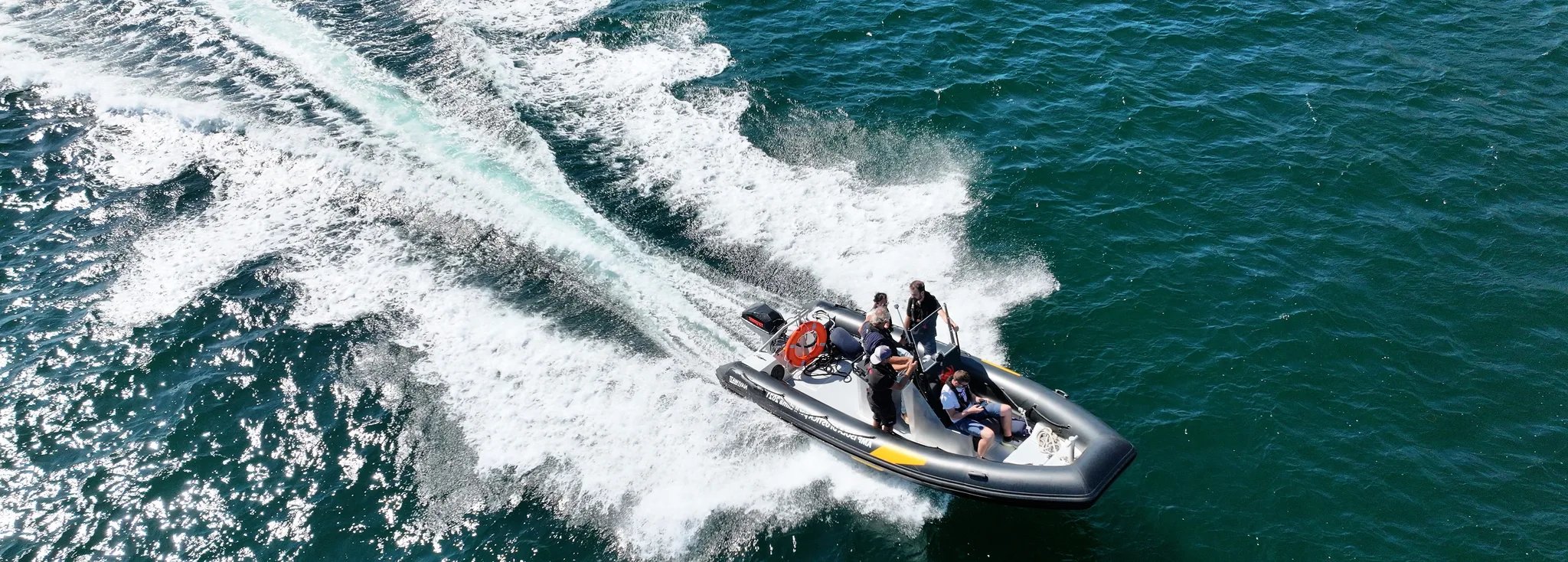
Unit number 16 of the ZenPro 580, a fully electric rigid inflatable boat built by French shipyard BAB Boat, has been delivered to the Ustica Marine Protected Area, the oldest marine reserve in Italy, where it is now used daily for surveillance and environmental monitoring patrols.
This is not a prototype. This is not a pilot programme. This is a professional-grade electric boat doing a demanding job in one of the most ecologically sensitive waters in the Mediterranean.
Ustica: Where the Sea Comes First
To understand why this matters, you need to know a little about Ustica.
A tiny volcanic island 36 nautical miles north-west of Palermo, Ustica is home to fewer than 1,300 permanent residents and one of the most biodiverse marine ecosystems in the entire Mediterranean. Its waters host Posidonia oceanica meadows, the critically endangered Pinna nobilis bivalve, sea turtles, dolphins, grouper, tuna, barracuda, and over a dozen protected species.
In 1986, the fishermen of Ustica, not environmental lobbyists or government regulators, but the fishermen themselves, petitioned for the creation of a marine reserve to protect the sea they depended on. The result was Italy's first ever Marine Protected Area (MPA), established by ministerial decree that same year.
Today, the reserve covers over 15,000 hectares and is divided into three zones with increasingly strict rules. Zone A is an integral reserve where all navigation, anchoring and fishing is forbidden. Zone B is a general reserve where leisure navigation is permitted but fishing and any extraction of marine life is banned. Zone C is a partial reserve where navigation and mooring are permitted, and commercial fishing is allowed only for local fishermen with authorisation.
On top of this, every August, non-residents cannot even bring motor vehicles to the island by ferry. Ustica is serious about protecting what it has.
It is precisely in this context, strict rules, sensitive waters, professional daily use, that the electric ZenPro 580 makes its case.
The Boat: ZenPro 580 by BAB Boat
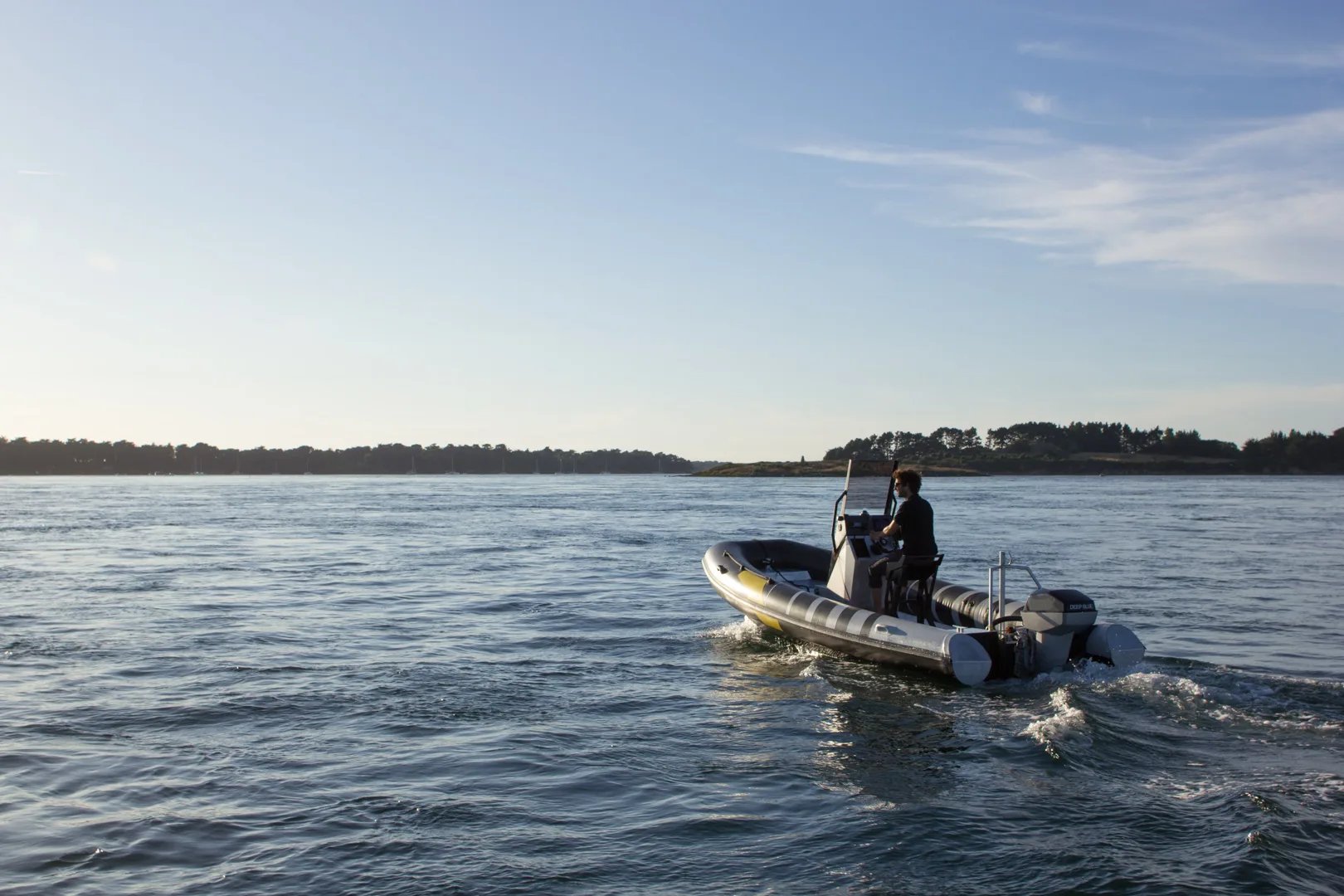
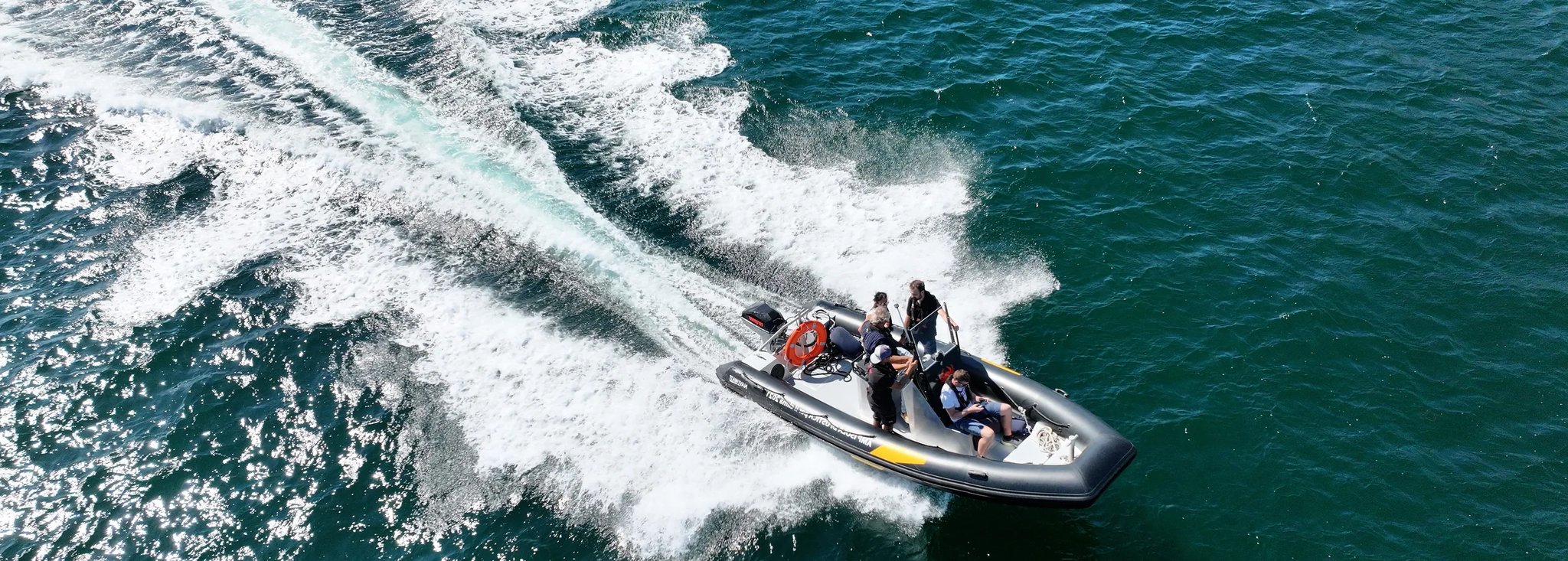
The ZenPro 580 is a 5.80-metre aluminium-hulled RIB designed from the ground up as a professional workboat with 100% electric propulsion. It is not a converted petrol boat with a battery bolted on. It was engineered for electric from day one.
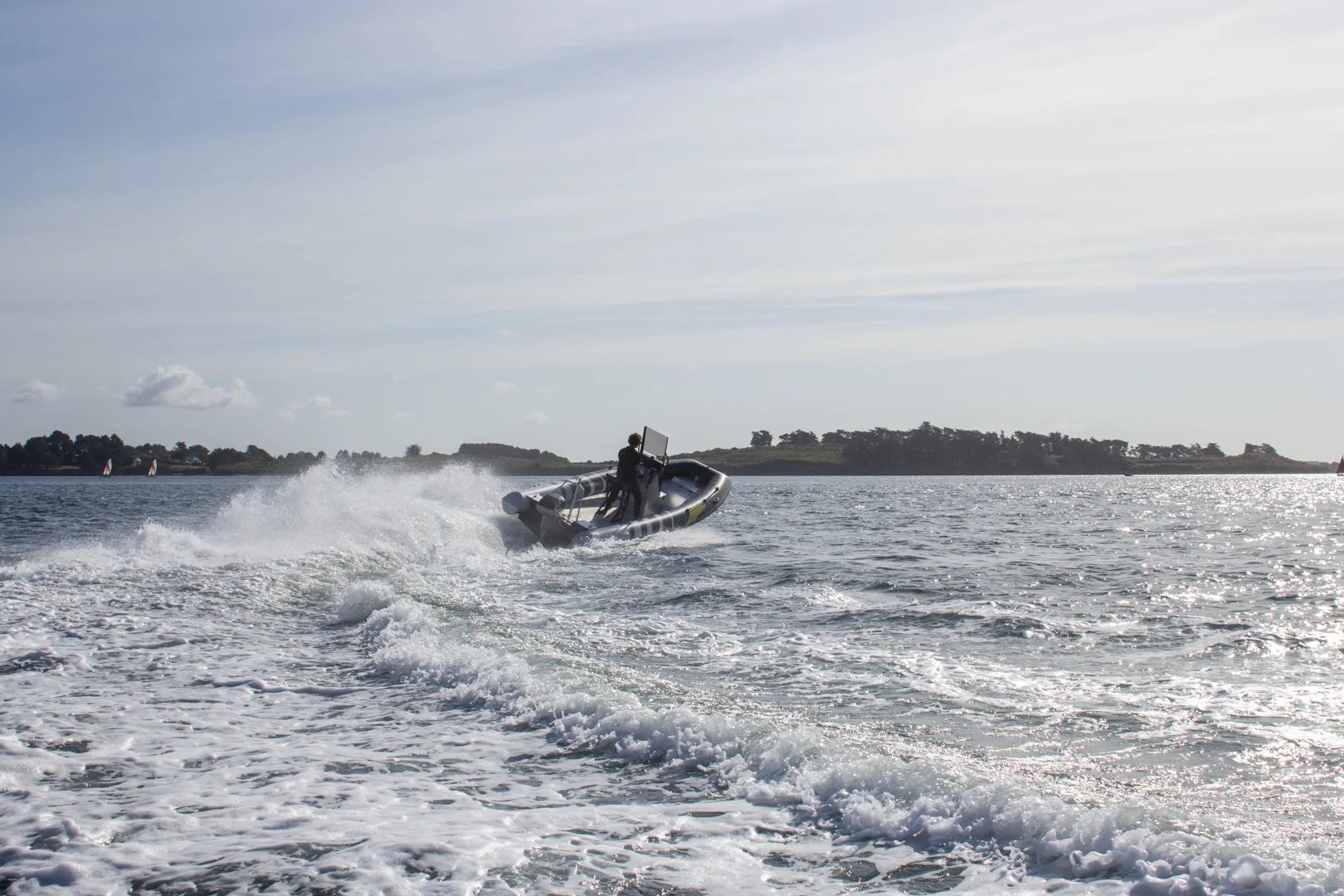
In terms of specs, it is powered by a Torqeedo Deep Blue 50 kW outboard motor and a lithium-ion battery of 42 kWh. It reaches a top speed of 24 knots, has a range up to 12 hours, and measures 5.8m in length by 2.42m in beam. The charge is achieved in 12 hours on a standard 3.3 kW (220V monophase). Fast charge is also available. Starting from €128,500. View full specs and request information →
Not a toy. This is a serious piece of infrastructure.
The Torqeedo Deep Blue motor, co-developed with BMW, is the same technology platform that powers BMW's electric cars. It comes with 260 monitoring lines, constant battery management across all modes (charging, discharging and storage), and gas evacuation safety systems in the event of a cell failure. It is, in short, built to the standards of the automotive industry.

Why Electric Makes Sense Here and Everywhere
The Ustica team did not choose electric for ideological reasons. They chose it because it is the right tool for the job.
Silence is a professional advantage. A patrol boat that cannot be heard is a better surveillance boat. When you are trying to catch people violating protected zone rules, illegal fishing, unauthorised anchoring, intrusion into Zone A, arriving in silence is a tactical benefit. No rumble of a diesel engine to warn someone off before you arrive.
Zero emissions also protects what you are there to protect. Patrolling a marine reserve with a diesel engine is a contradiction. The ZenPro 580 produces no exhaust fumes, no hydrocarbons, no particulate matter in the water. In an area dedicated to the health of Posidonia meadows and protected species, this is not a small detail.
The operating costs are real and significant. Electricity is dramatically cheaper than diesel. The Torqeedo Deep Blue system requires almost no maintenance compared to a combustion engine: no oil changes, no fuel injectors, no exhaust system to service. For a public institution managing a tight budget, this matters as much as the environmental argument.
The Broader Pattern: Electric is Taking Over Marine Protected Areas
Ustica is not alone. Across Italy, marine protected areas are making the switch to electric vessels and the trend is unmistakable. Miramare in Trieste runs the Fabellina electric boat. The Egadi Islands at Favignana operate the Ev-Ita electric patrol vessel. Capo Testa-Punta Falcone in Sardinia uses an electric boat for its environmental and wildlife rangers. The Cinque Terre is actively transitioning its fleet despite some resistance from local charter operators.
The logic is simple: areas that protect the marine environment have a responsibility, and increasingly a legal incentive, to operate with zero-emission vessels. As regulations tighten across European waters, access to Marine Protected Areas will increasingly favour electric boats. This is not speculation. It is already happening.
Q&A with Valentin Blanchard, Head of Electric Sales, BAB Boat
We sat down with Valentin Blanchard, the person responsible for the electric range at BAB Boat and the man who closed the Ustica sale, to ask him the questions our readers most want answered.

Once they are on board, they realize they can operate an electric boat in exactly the same way as their previous petrol-powered vessels. Valentin Blanchard, BAB Boat
Volta: The ZenPro 580 starts from €128,500. That is a significant investment. How do you make the case for that price?
Valentin Blanchard: Yes, it is a significant upfront investment. However, we always emphasize the durability of the system and its very low maintenance requirements. This considerably reduces annual operating costs for users. Combined with the lower cost of electricity compared with petrol, the total cost of ownership becomes highly competitive. For professional use, the boat typically becomes more economical after five to six years.
Volta: This is unit number 16 of the series. Who else is using the ZenPro 580, and what kind of operations are they running?
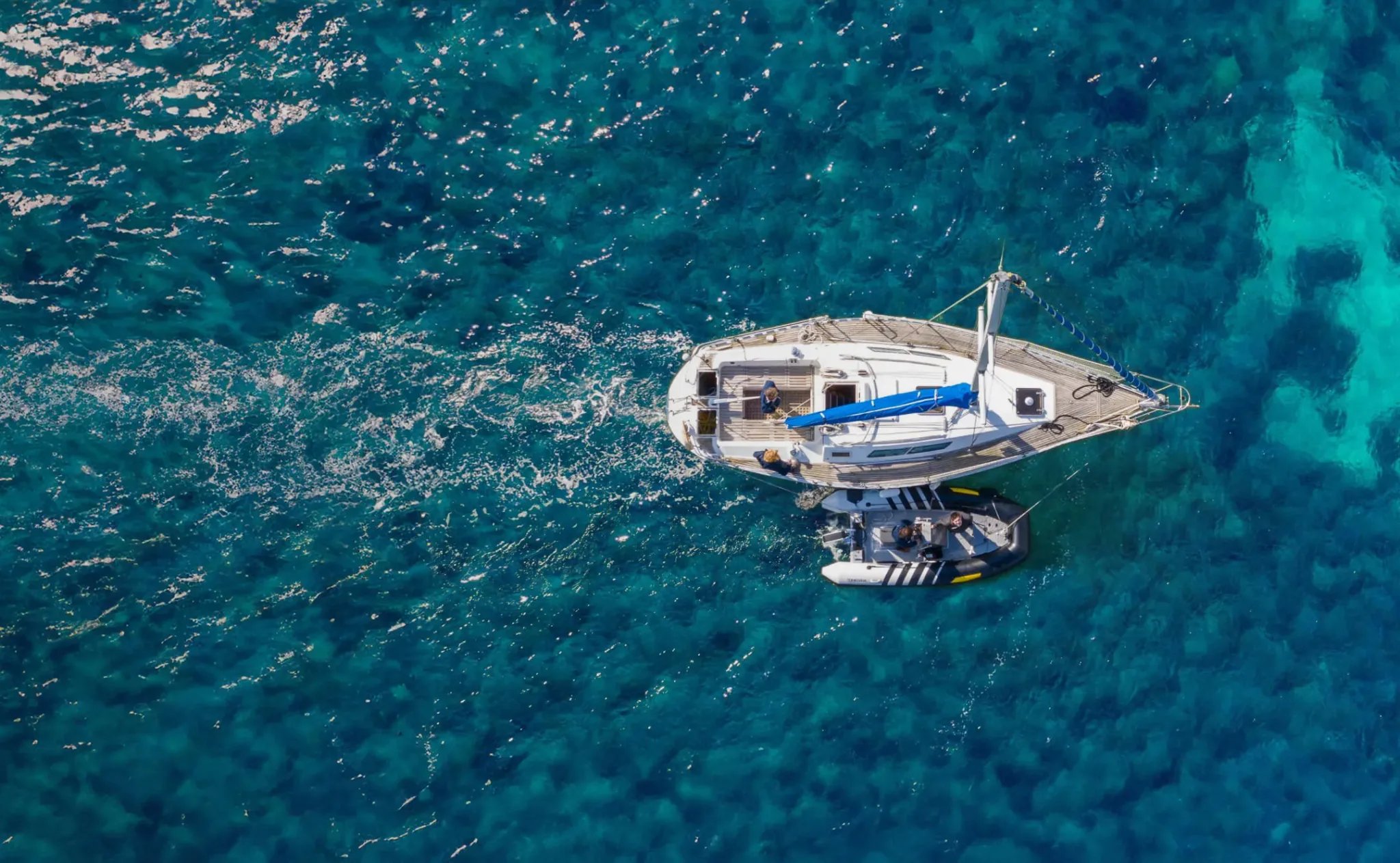
Valentin Blanchard: The ZenPro 580 was designed specifically for professional use. It is a robust vessel built to meet Bureau Veritas standards, ensuring reliability and safety in demanding operations. The hull was developed to minimise energy consumption as much as possible, reducing electricity usage while also limiting environmental impact. Our first clients were marinas, where the boat is used daily for low-speed operations and towing when required. In this type of use, the boat can operate throughout the day without charging and is simply plugged in overnight. Since then, applications have expanded to surveillance, passenger transport, and even hospitality. We currently have two ZenPro units operating as food boats, essentially floating food trucks. Thanks to our in-house naval architecture team, we are also able to adapt the platform to specific operational needs and turn custom projects into reality.
Volta: What was the key factor that convinced the Ustica Marine Reserve to go electric? Was it the environmental argument, the operating cost, or something else entirely?
Valentin Blanchard: Ustica is a small island where fuel supply can be both complex and costly, so there was a strong practical consideration from the start. However, the main driver was the island's long-term commitment to sustainable mobility. Ustica has been experimenting with electric transportation projects for years, and the acquisition of the ZenPro demonstrates that this transition can successfully be extended to maritime operations as well.
Volta: One concern we often hear from potential buyers is range anxiety, the fear of running out of charge at sea. How do professional clients manage autonomy in practice, and would a fast-charge option change the equation?
Valentin Blanchard: Before delivering any boat, we carefully study its intended navigation profile: cruising speed, daily distance, operating cycles, and available charging infrastructure. From there, we size the propulsion system accordingly, balancing three key parameters: motor power, battery capacity, and charger power. In practice, many professional operators already use petrol-powered boats on a daily basis that could be directly replaced by electric vessels without changing their operating patterns. Today's technology allows a large number of users to run their boats throughout the day and recharge overnight using standard low-power connections. Fast charging further expands these possibilities. By enabling rapid energy replenishment, it can unlock new operational profiles and facilitate the electrification of additional vessels.
Volta: What is the one thing about electric professional boats that most surprises clients the first time they take one out?
Valentin Blanchard: There are many advantages that have already been widely demonstrated in the automotive sector. But from our experience, the main surprise for professional users is reassurance: once they are on board, they realize they can operate an electric boat in exactly the same way as their previous petrol-powered vessels. The handling, the mission profile, and the operational logic remain familiar. What changes is simply the propulsion system underneath. That immediate sense of continuity is often what convinces them most.
Volta: Where do you see the professional electric boat market in five years? And what is the single biggest obstacle still holding buyers back?
Valentin Blanchard: It is always difficult to predict the future with certainty, but several trends are already very clear. We are seeing climate-related events becoming more frequent, and the pressure for decarbonisation is steadily increasing. Continued technological progress and growing competition should help reduce the cost of electric propulsion systems, lowering the initial investment barrier over time. More regions are also expected to restrict or even prohibit the use of combustion engines, which will progressively push professionals toward electric solutions. Many operators are already anticipating this transition today.
We have reached out to the team at the Ustica Marine Protected Area to hear how the ZenPro 580 is performing in the field. We will update this article when we hear back from them.
What This Means for You
If you are exploring electric boats for the first time, the Ustica story is worth holding onto, not because you are planning to patrol a marine reserve, but because of what it tells you about the technology.
The ZenPro 580 at Ustica runs every day, in saltwater, in a demanding professional context, in one of Italy's most environmentally sensitive locations. It was chosen not out of enthusiasm for new technology, but because it was the best tool for the job.
That is the quiet confidence that the electric boating world has been building toward. Real boats. Real use. Real results.
Volta is Europe's platform for sustainable boating. If you want to explore electric RIBs and workboats, browse our full catalogue. If you are new to electric boating and want to understand the basics first, start with our guide Electric Boats FAQ: Top 10 Questions Answered.
Get the electric boat brief
New listings, buyer's guides and range data, about once a month. Unsubscribe anytime.
We only use your email for the Volta brief. Unsubscribe anytime.