Electric boats are gaining popularity for their eco-friendly vibe and smooth rides, but charging can seem tricky at first. The good news? It's often simpler than you think, building on existing setups at marinas and ports. This guide breaks it down into easy steps, with real-world examples, battery size breakdowns, and plug type guidance that matters for owners and buyers. As of mid-2025, networks are expanding fast, so things are only getting better.
Why Charging Matters for Electric Boat Owners and Buyers
Before diving in, a quick note for potential buyers: factor in your typical trips when choosing a model. Smaller batteries (around 50 kWh) suit short lake outings, while larger ones (up to 200 kWh) handle commercial or long-haul needs. Charging compatibility is key. Look for boats with versatile ports that match common standards. Costs? Expect $500 to $2,000 for a home setup, but many marinas offer free or low-cost access. Apps like PlugShare or Aqua superPower's tools can help locate spots and estimate times.
Overnight Charging at Ports and Marinas
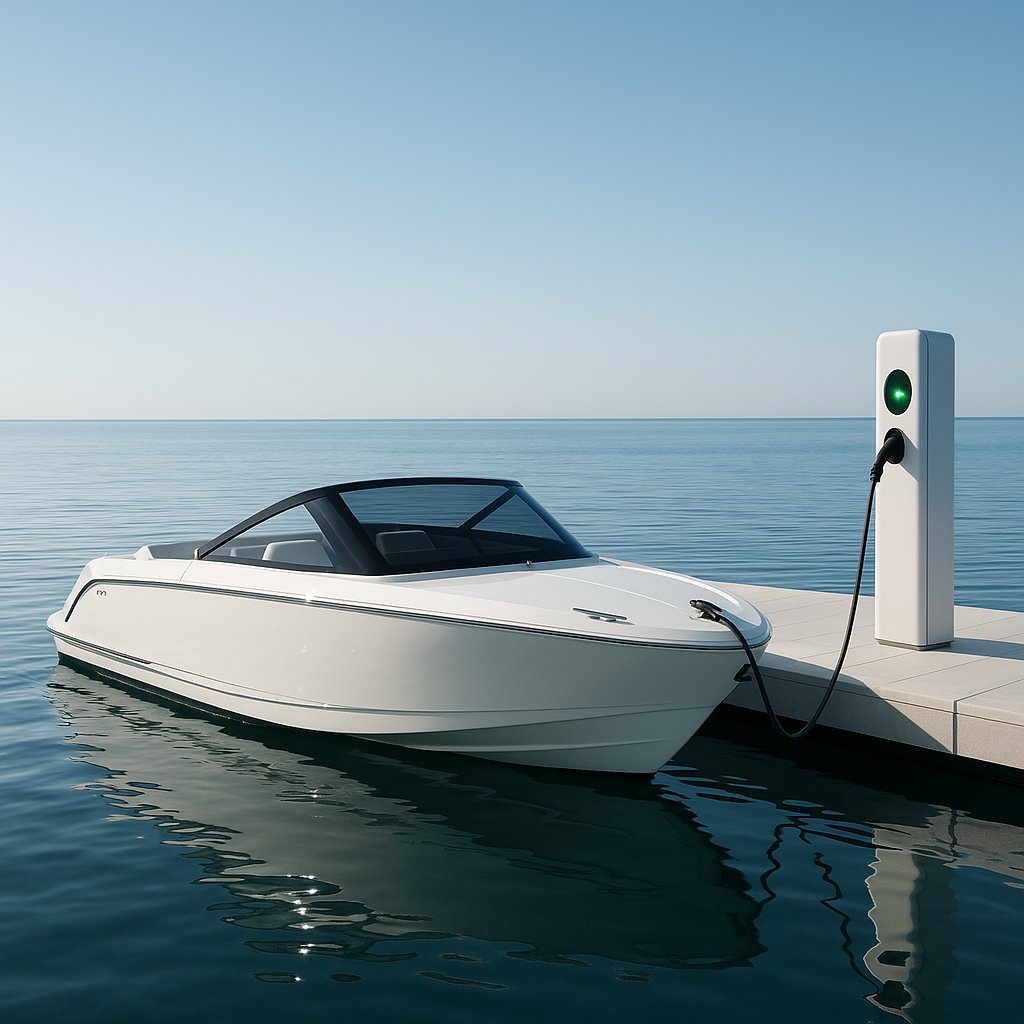
This is the go-to for most owners, using what's already there. Standard outlets at docks provide slow AC charging that gets you ready by morning. In 10 to 12 hours, you can add 60 to 72 kWh, which covers a lot for daily use.
Here's how it plays out for common battery sizes:
- 50 kWh battery (compact dinghy or day runner): Reaches full in 10 to 12 hours, great for quick local spins.
- 100 kWh battery (mid-size cruiser): Grabs about 72% overnight, restoring a solid day's range.
- 150 kWh battery (luxury hydrofoiler): Adds around 48%, plenty for coastal adventures.
- 200 kWh battery (commercial ferry): Picks up about 36%, fine for gradual top-offs over nights.
Safety note: always use weatherproof covers on connections to prevent water damage, especially in salty environments.
Fast Charging for On-the-Go Travel
When you're covering more ground (or water), DC fast chargers step in. These powerhouses deliver up to 200 kW, bumping you from 10% to 80% in 20 to 35 minutes. Costs run $0.30 to $0.50 per kWh, often cheaper than fuel for gas boats.
Breakdowns by battery size (based on a 150 kW charger for a 70% boost):
- 50 kWh battery: About 14 minutes, like a fast break at Lake Tahoe's Homewood Marina with its 100 kW setup.
- 100 kWh battery: Around 28 minutes, ideal for Norway's 150 kW Green Tail network in Bergen during fjord runs.
- 150 kWh battery: Roughly 42 minutes, works well on the UK's Thames with Aqua superPower's 75 to 150 kW hubs.
- 200 kWh battery: About 56 minutes, suits hops in Sydney Harbour or Singapore's 100 kW ports.
Understanding Plug Types and Connections
Not all plugs are the same, so knowing your options avoids surprises. Electric boats borrow from car tech but have marine twists for waterproofing. Here's a rundown of common types:
- Type 1 (J1772): Common in North America for AC charging. Five-pin setup, good for overnight docks at 6 to 12 kW. Many US marinas use this, easy for buyers starting out.
- Type 2 (Mennekes): Standard in Europe for AC, with seven pins supporting up to 22 kW. Adapters let you plug into car stations. Weather-sealed versions resist corrosion.
- CCS (Combined Charging System): For DC fast charging worldwide, combining AC and DC in one plug. Handles up to 350 kW. Boats like the Candela C-8 use it for 20-minute boosts.
- CHAdeMO: Older but still around in Asia and some spots, for DC up to 100 kW. Phasing out, so buyers might skip models locked to this.
- Marine-Specific: Waterproof plugs with twist-locks for boats, often 30A or 50A. Essential for salty conditions.
Advice for buyers: go for boats with universal adapters or multi-standard ports to future-proof. Invest in a $100 to $300 adapter set. It expands your options globally.
Additional Tips for Electric Boat Users and Buyers
- Battery Health and Monitoring: Use onboard apps or devices like Victron monitors to track charge levels remotely. For longevity, avoid full discharges, aim to stay above 20%. Opt for lithium-ion batteries with at least 8-year warranties.
- Cost-Saving Hacks: Join networks like Aqua superPower for discounted rates or free sessions. Solar panels (adding $2,000 to $5,000) can extend range by 5 to 20 miles daily, cutting grid reliance.
- Safety Essentials: Install ground fault interrupters (GFIs) on all connections to prevent shocks. In cold weather, preheat batteries for better efficiency. Some models do this automatically.
- Finding Chargers: Apps such as Zapmap (UK/EU) or ChargeHub (US/Canada) show real-time availability. For global trips, check the International Maritime Organization's updates on expanding networks.
- For Buyers, Test Before You Buy: Rent an electric boat for a weekend to gauge charging in your area. Consider total cost of ownership: electrics save 40 to 60% on fuel and maintenance long-term.
All in all, charging an electric boat fits right into modern life, with options that keep evolving. With infrastructure booming across Europe and North America, the future of clean boating looks wide open.