Sommaire
La propulsion électrique: une évolution naturelle de la plaisance à moteur
Cela peut surprendre, mais la propulsion électrique des bateaux n'est pas une invention récente. Comme pour l'automobile, elle remonte au XIXᵉ siècle. En 1839, l'inventeur allemand Moritz von Jacobi conçoit et met à l'eau, à Saint-Pétersbourg, le premier bateau électrique sur la Neva: une unité de 24 pieds (7,3 m) pouvant accueillir jusqu'à 14 passagers à une vitesse de croisière de 3 milles (4,8 km) par heure.
Au cours des décennies suivantes, les modes de propulsion ont évolué: de la vapeur au naphta, puis à l'électricité, à l'essence et au diesel. À l'Exposition universelle de Chicago de 1893, les moteurs électriques étaient considérés comme plus sûrs et plus maniables que les autres motorisations.
Malgré cet intérêt précoce, l'électrification des bateaux est rapidement tombée dans l'oubli. Faute de technologie et d'innovation, les systèmes électriques ne parvenaient ni à produire et stocker assez d'énergie, ni à offrir des performances satisfaisantes sur l'eau.
4 façons dont la propulsion électrique aide l'environnement
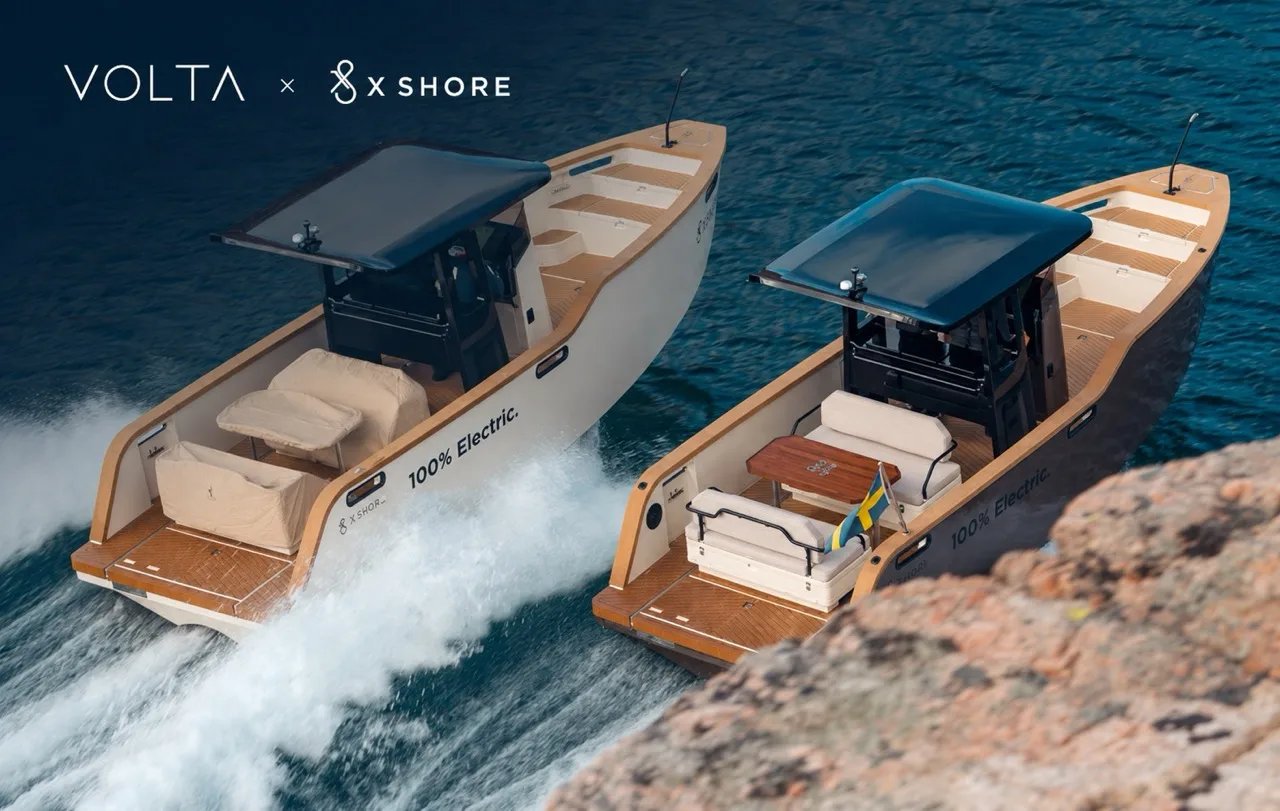
Avec le « Pacte vert pour l'Europe », l'Union européenne s'engage en faveur de propulsions sans carbone afin d'aider les plaisanciers à basculer vers une plaisance verte. À partir de 2035, des lois restrictives interdiront la vente de véhicules neufs émettant du carbone. La propulsion électrique, en particulier alimentée par des modules photovoltaïques, va révolutionner l'économie de la plaisance. Elle est écoresponsable de quatre manières:
1. Pas de pollution sonore
La pollution acoustique est un problème préoccupant. De nombreux ports et villes adoptent des règles pour empêcher que le bruit pèse sur la santé publique. Parmi leurs nombreux avantages, les motorisations silencieuses permettent aux plaisanciers de profiter de leurs activités préférées, de naviguer toute la journée sans générer de bruit au-dessus de l'eau.
2. Zéro émission
Les unités électriques réduisent drastiquement les émissions liées aux activités sur l'eau: les plaisanciers peuvent ainsi diminuer leur empreinte carbone sans effort, qu'ils naviguent ou qu'ils laissent leur bateau dans une port de plaisance ou un port.
3. Préservation de la vie marine
Les moteurs silencieux n'émettent presque aucun bruit ni aucune fréquence sous l'eau, ce qui réduit fortement les nuisances que la plaisance fait peser sur les animaux et l'environnement aquatiques. Sous l'eau, le bruit est très perturbateur: il se propage vite, finit par toucher un grand nombre d'animaux, les empêche de localiser proies et prédateurs et perturbe leurs cycles naturels, dont la reproduction.
4. Accès aux zones réglementées
Naviguer dans des zones où les moteurs thermiques sont interdits, ou le seront bientôt, n'est possible qu'avec des bateaux électriques ou des unités sans motorisation intégrée. C'est le cas, par exemple, de sites touristiques comme les canaux d'Amsterdam ou de Venise.
Conclusion
Si les enjeux environnementaux et les législations associées risquent de dissuader certains propriétaires à l'avenir, l'arrivée sur le marché de nouveaux constructeurs durables viendra contrebalancer cette tendance et promouvra un mode de vie écoresponsable sur l'eau. Avec une industrie qui prend la bonne direction et de nouveaux modèles électriques lancés chaque année, la propulsion électrique va s'imposer, et devenir, par conséquent, plus accessible au plus grand nombre.
Recevoir le brief du bateau électrique
Nouvelles annonces, guides d’achat et données d’autonomie, environ une fois par mois. Désabonnement possible à tout moment.
Nous utilisons votre e-mail uniquement pour le brief Volta. Désabonnement possible à tout moment.