Sommaire
Quels sont les avantages d'exploitation et de performance des bateaux électriques?
Dans un monde nautique de plus en plus soucieux d'environnement, les bateaux électriques redéfinissent la navigation comme une alternative plus propre et plus silencieuse aux moteurs thermiques classiques. Animés par des batteries lithium à haute densité et des systèmes de propulsion efficaces, ils n'émettent aucun gaz d'échappement en exploitation, ce qui les rend idéaux dans des environnements sensibles comme les lacs protégés ou les réserves marines. Cela réduit non seulement les émissions sur le cycle de vie de 50 à 80 %, mais offre aussi une expérience à bord paisible, qui dérange moins la faune et améliore le confort des passagers. Des cas concrets, comme les ferries scandinaves, montrent qu'il est possible de respecter des réglementations européennes strictes tout en renforçant l'image de marque par la durabilité.
Côté performance, les bateaux électriques excellent grâce à un couple instantané pour une accélération fluide et un pilotage précis, parfaits pour les sports nautiques ou les manœuvres serrées dans des ports fréquentés. Des modèles comme le Candela C-8 atteignent 30 nœuds avec une réactivité qui rivalise avec les bateaux à essence, sans consommation excessive. Le niveau sonore reste sous 50 dB, l'équivalent d'une conversation feutrée,, ce qui élimine le grondement du moteur et laisse place aux sons de la nature. L'efficacité scelle l'affaire: le freinage régénératif récupère de l'énergie et prolonge l'autonomie de 10 à 15 %, tandis que la baisse du nombre de pièces en mouvement réduit l'entretien et fait chuter les coûts de long terme de 40 à 60 %.
Comment recharger un bateau électrique?
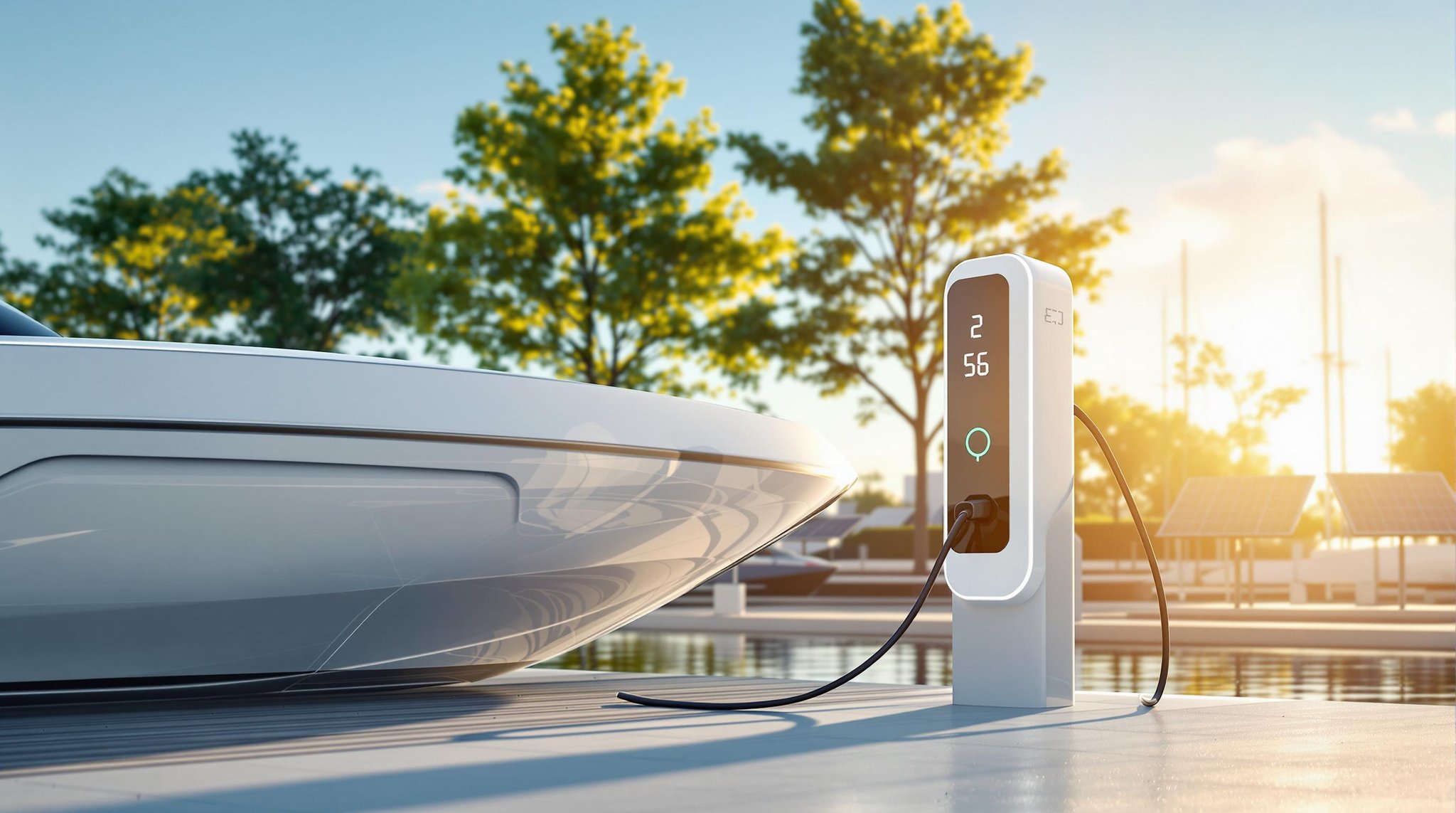
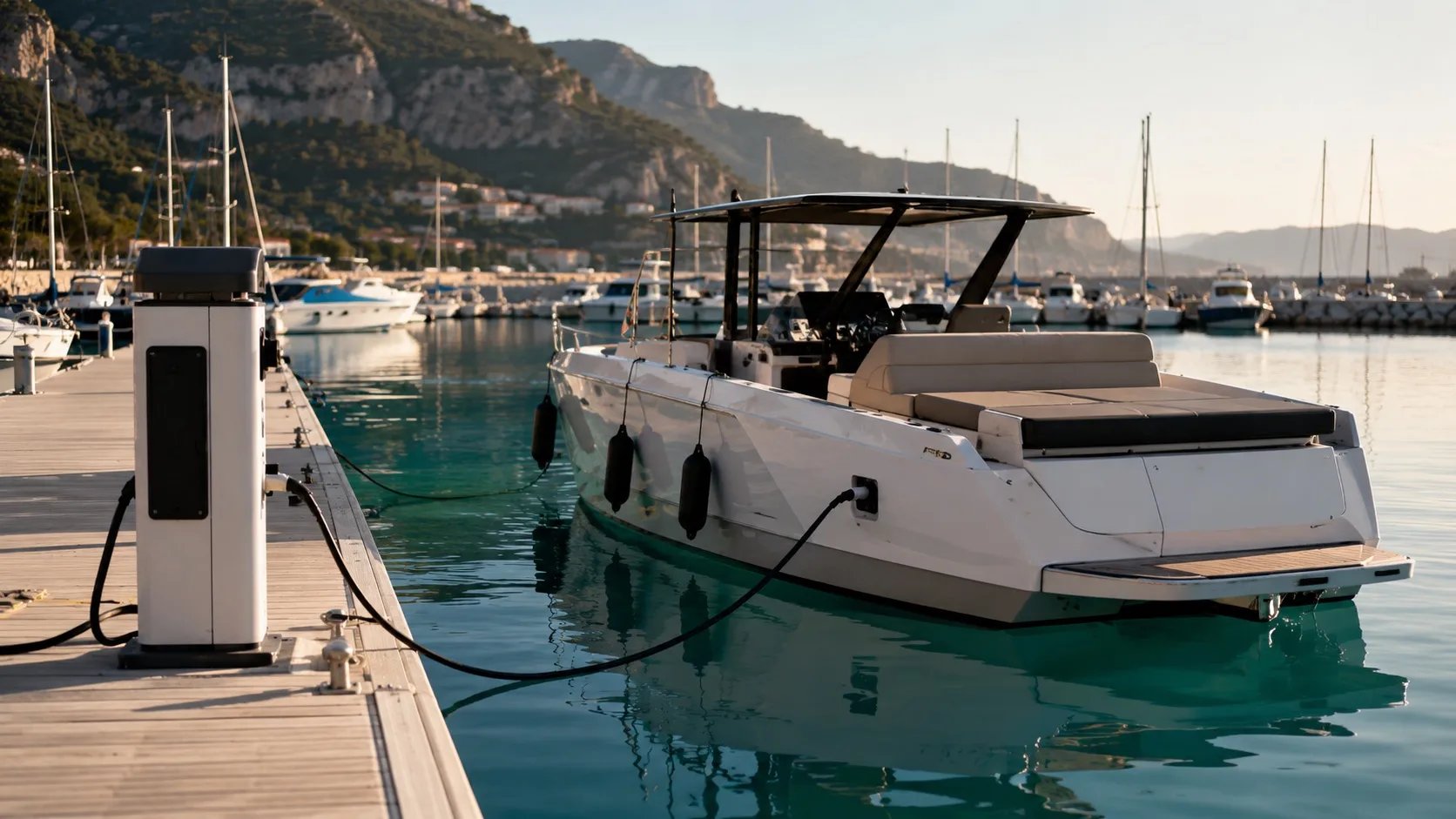
Recharger un bateau électrique s'appuie sur une infrastructure accessible et alignée sur les habitudes de navigation. La plupart des pontons dans les ports et ports de plaisance du monde disposent déjà de prises standards (110 V ou 220 V à quai), suffisantes dans la majorité des cas pour une recharge nocturne, soit une charge complète d'une batterie moyenne en 8 à 12 heures. Des chargeurs portables élargissent les possibilités en zones isolées, et les panneaux solaires fournissent une énergie continue, apportant 5 à 20 milles nautiques par jour sous un bon ensoleillement. Les systèmes de recharge rapide CC jusqu'à 200 kW font passer la batterie de 10 % à 80 % en 20 à 35 minutes. Avec plus de 500 points de recharge marine en Europe à la mi-2025, la recharge nocturne couvre la plupart des besoins, tandis que la recharge rapide ouvre l'exploration plus large.
Quelle autonomie pour un bateau électrique sur une seule charge?
L'autonomie d'un bateau électrique varie sensiblement selon la capacité de la batterie, le design du bateau et l'usage, allant de 20 milles nautiques pour des modèles d'entrée de gamme à plus de 60 milles pour les systèmes avancés. Une batterie typique de 50 kWh dans un petit bateau de plaisance offre 25 à 35 milles à vitesse de croisière, tandis que des packs plus grands de 100 à 150 kWh sur des unités intermédiaires atteignent 40 à 50 milles dans des conditions normales. Des designs très efficaces comme l'hydroptère Candela C-8 délivrent jusqu'à 57 milles nautiques à 22 nœuds. La vitesse a un impact spectaculaire: à plein régime, la distance chute de 40 à 60 %, alors qu'en mode éco entre 8 et 12 nœuds, l'autonomie peut souvent doubler. Les batteries solid-state, attendues d'ici 2030, promettent une densité énergétique supérieure de 50 %, soit potentiellement le double des autonomies actuelles.
Quel entretien demande un bateau électrique?
Les bateaux électriques se distinguent par leurs besoins d'entretien réduits, 90 % de pièces en mouvement en moins qu'un modèle thermique: pas de vidange, pas de filtres à carburant, pas de réparations d'échappement. Les tâches essentielles concernent le système électrique: nettoyer le moteur tous les 3 à 6 mois, inspecter câblage et connexions à la recherche de corrosion une fois par an, et surveiller la santé de la batterie tous les mois via les applications embarquées. Pour la plupart des propriétaires, le coût annuel reste inférieur à 200 $, contre plus de 800 $ pour les bateaux thermiques. Pour les unités très sollicitées, prévoyez une inspection professionnelle tous les 1 à 2 ans, en insistant sur les joints et les contrôleurs.
Les bateaux électriques sont-ils plus économiques que les bateaux à essence?
Les bateaux électriques affichent souvent un prix d'achat supérieur, typiquement de 20 à 50 % de plus qu'un modèle thermique comparable, mais leur rentabilité à long terme se révèle par des économies substantielles à l'usage et à l'entretien. L'électricité coûte 50 à 70 % de moins par mille nautique que l'essence ou le diesel, ce qui représente 500 à 1 500 $ d'économies annuelles pour un usage de plaisance basé sur 100 heures de navigation. L'entretien constitue un autre avantage: sans vidange ni systèmes carburant complexes, les bateaux électriques réduisent les coûts de service de 40 à 60 %. Les incitations publiques, crédits d'impôt américains jusqu'à 7 500 $ ou subventions européennes couvrant 10 à 30 % des coûts, diminuent encore la prime à l'achat, rendant le seuil de rentabilité atteignable en 3 à 5 ans pour un usage modéré.
Quels types de bateaux électriques existent?
Le marché des bateaux électriques propose des options variées, des modèles d'entrée de gamme abordables aux alentours de 20 000 € à des unités de luxe au-delà de 500 000 €. Les petits bateaux de plaisance offrent des capacités de 20 à 50 kWh, idéales pour des sorties courtes en eaux intérieures. Pour les amateurs de performance, le X Shore Eelex 8000 propose 126 kWh pour une autonomie pouvant atteindre 100 milles nautiques, tandis que l'hydroptère Candela C-8 atteint 57 milles à 22 nœuds. Côté luxe, les catamarans solaires Silent Yachts permettent une autonomie quasi illimitée pour des voyages d'île en île.
Quel est l'impact environnemental de la construction des bateaux électriques?
La fabrication des bateaux électriques a un coût environnemental, principalement lié à la production des batteries: une batterie typique de 100 kWh génère environ 15 à 20 tonnes d'équivalent CO₂. Mais les bénéfices à long terme compensent largement cette empreinte initiale, avec des émissions nulles en exploitation qui réduisent le CO₂ sur le cycle de vie de 50 à 80 % par rapport aux bateaux à essence sur plus de 10 ans d'utilisation. Des marques européennes comme Candela et X Shore privilégient les matériaux recyclés et des chaînes d'approvisionnement éthiques, et 95 % des composants des batteries peuvent être valorisés en fin de vie en vertu de la Directive Batteries de l'UE.
Les bateaux électriques peuvent-ils fonctionner à l'énergie solaire?
Absolument, l'énergie solaire est un moyen viable, et de plus en plus prisé, pour recharger les batteries des bateaux électriques, en complément propre ou même comme source d'énergie principale. Des panneaux solaires intégrés peuvent ajouter 10 à 30 milles nautiques sur des sorties à la journée dans des conditions optimales. Les modèles Silent Yachts disposent d'imposants ensembles solaires sur le toit, capables de produire jusqu'à 16 kW, permettant un fonctionnement quasi continu sous des climats ensoleillés. Une installation solaire de 5 à 10 kW coûte 2 000 à 5 000 $ à l'installation et s'amortit en 2 à 4 ans grâce aux économies d'énergie, surtout avec des crédits d'impôt américains ou des incitations vertes européennes couvrant 20 à 30 % des coûts.
Quel avenir pour les bateaux électriques?
L'industrie du bateau électrique est prête à connaître une croissance explosive, avec des projections de marché estimant un taux de croissance annuel composé de 13,7 % d'ici 2030, passant de 5,26 milliards de dollars en 2022 à plus de 11 milliards. Les batteries solid-state pourraient doubler la densité énergétique d'ici 2027, permettant des autonomies dépassant 100 milles nautiques sans recharge. La technologie V2G (vessel-to-grid) intégrée dans les futurs modèles pourrait permettre aux bateaux de revendre l'excédent d'énergie au réseau, réduisant les coûts de 15 à 25 %.
« L'infrastructure de recharge est essentielle à l'adoption des bateaux électriques. L'essentiel de la recharge se fera à votre ponton, lentement, pendant la nuit, mais pour rendre possibles les longues distances et la haute vitesse, il faut un réseau de chargeurs rapides qui le permette. », Kjetil Watnedal, Chief Digital Officer chez Evoy
Conclusion: pourquoi les bateaux électriques sont la prochaine étape du transport maritime
Le passage aux bateaux électriques marque un tournant dans le transport maritime, porté par une conscience environnementale accrue et des avancées technologiques majeures. Avec un marché mondial qui devrait croître de 13,7 % par an pour atteindre 11,36 milliards de dollars d'ici 2028, l'intérêt explose aux États-Unis et en Europe. Les ferries scandinaves ont réduit leurs émissions jusqu'à 5 700 tonnes de CO₂ par an tout en abaissant leurs coûts d'exploitation de 85 à 90 %. Avec l'évolution des technologies batterie et l'expansion des réseaux de recharge, plus de 500 points en Europe,, les bateaux électriques deviennent des incontournables du quotidien. Ils permettent d'économiser 40 à 60 % à long terme grâce à la baisse du carburant et de l'entretien, et à mesure que l'industrie s'oriente vers des horizons plus verts, ils incarnent une voie fonctionnelle et écoresponsable, aussi bien pour la plaisance que pour les usages professionnels.
Recevoir le brief du bateau électrique
Nouvelles annonces, guides d’achat et données d’autonomie, environ une fois par mois. Désabonnement possible à tout moment.
Nous utilisons votre e-mail uniquement pour le brief Volta. Désabonnement possible à tout moment.